
Not every life-saving drug acts directly on the brain. Many medicines work quietly through the peripheral nervous system (PNS)—the network that regulates heart rate, breathing, digestion, muscle contraction, and gland secretion. From asthma inhalers to eye drops for glaucoma, these drugs target autonomic and neuromuscular pathways with remarkable precision.
UNIT 3 explores the organization of the autonomic nervous system (ANS) and the pharmacology of drugs that stimulate, block, or modify peripheral nerve signaling.
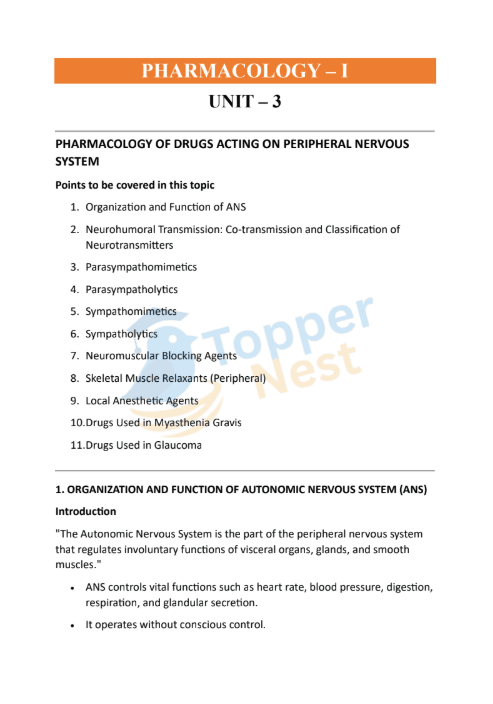
Organization and Function of the ANS
What Is the Autonomic Nervous System?
The ANS controls involuntary body functions. It operates automatically and maintains homeostasis.
Divisions
- Sympathetic (fight or flight)
- Parasympathetic (rest and digest)
The sympathetic system increases heart rate and blood pressure, while the parasympathetic system conserves energy and stimulates digestion.
Understanding this balance is crucial when selecting drugs.
Neurohumoral Transmission
How Signals Travel
Neurohumoral transmission refers to the release of chemical messengers from nerve endings.
Steps
- Neurotransmitter synthesis
- Storage in vesicles
- Release into synapse
- Receptor binding
- Termination by degradation or reuptake
Co-Transmission and Neurotransmitter Classification
Neurons may release more than one transmitter simultaneously (co-transmission).
Types of Neurotransmitters
- Cholinergic (acetylcholine)
- Adrenergic (noradrenaline)
- Peptides
- Purines
Each produces different physiological effects.
Parasympathomimetics (Cholinergic Agonists)
These drugs mimic parasympathetic activity by stimulating muscarinic receptors.
Examples
- Pilocarpine
- Bethanechol
Therapeutic Uses
- Glaucoma
- Urinary retention
- Xerostomia
They increase secretions and smooth muscle contraction.
Parasympatholytics (Anticholinergics)
These block muscarinic receptors, reducing parasympathetic effects.
Examples
- Atropine
- Ipratropium bromide
Uses
- Asthma
- Motion sickness
- Pre-anesthetic medication
They reduce secretions and relax airways.
Sympathomimetics
These stimulate sympathetic receptors.
Examples
- Epinephrine
- Salbutamol
Clinical Uses
- Anaphylaxis
- Asthma
- Cardiac arrest
They increase heart rate and bronchodilation.
Sympatholytics
These block sympathetic activity.
Examples
- Propranolol
- Prazosin
Uses
- Hypertension
- Angina
- Anxiety
They reduce cardiac workload and blood pressure.
Neuromuscular Blocking Agents
These drugs block transmission at the neuromuscular junction, producing muscle relaxation.
Types
Non-depolarizing
- Vecuronium
Depolarizing
- Succinylcholine
Uses
- Surgery
- Intubation
- Mechanical ventilation
They ensure muscle immobility during procedures.
Skeletal Muscle Relaxants (Peripheral)
Used to relieve muscle spasm and spasticity.
They act either directly on muscle fibers or neuromuscular junctions.
Applications include orthopedic and neurological disorders.
Local Anesthetic Agents
Local anesthetics block sodium channels, preventing nerve impulse transmission.
Examples
- Lidocaine
- Bupivacaine
Uses
- Minor surgery
- Dental procedures
- Regional anesthesia
They provide pain relief without loss of consciousness.
Drugs Used in Myasthenia Gravis
Myasthenia gravis involves reduced neuromuscular transmission.
Example
- Neostigmine
These drugs increase acetylcholine levels and improve muscle strength.
Drugs Used in Glaucoma
Reduce intraocular pressure.
Examples
- Timolol
- Pilocarpine
They either decrease aqueous humor production or increase drainage.
Why Peripheral Pharmacology Matters
These drugs manage:
- Asthma
- Hypertension
- Surgical anesthesia
- Eye disorders
- Neuromuscular diseases
Without PNS pharmacology, modern surgery and emergency care would be impossible.