
Every thought, movement, memory, and emotion depends on chemical signals moving between neurons. When this delicate balance is disturbed, conditions like anxiety, insomnia, epilepsy, and depression arise. Modern pharmacology steps in with CNS-acting drugs that fine-tune these signals to restore normal function.
UNIT 4 takes a closer look at neurotransmission in the brain and the major drug classes that depress, stabilize, or modulate central nervous activity—from anesthetics used in surgery to antiepileptics that prevent seizures.
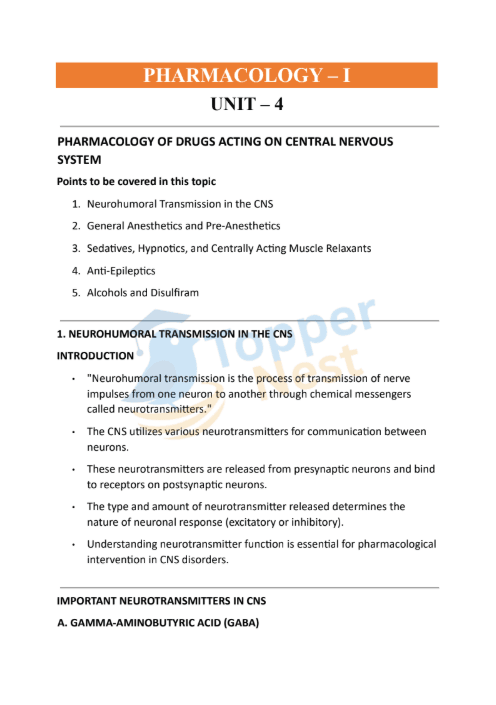
Neurohumoral Transmission in the CNS
How Signals Travel in the Brain
Neurohumoral transmission in the CNS involves:
- Neurotransmitter synthesis
- Storage in vesicles
- Release into synapse
- Receptor binding
- Reuptake or enzymatic breakdown
Even minor changes in this cycle can significantly affect mood, sleep, and motor control.
Key Neurotransmitters and Their Importance
Gamma-aminobutyric acid (GABA)
The primary inhibitory neurotransmitter.
- Produces calming and sedative effects
- Target of many anxiolytics and hypnotics
Glutamate
Major excitatory transmitter.
- Essential for learning and memory
- Excess leads to seizures
Glycine
Important in spinal cord inhibition.
- Regulates reflex activity
Serotonin
Controls mood, sleep, appetite.
- Linked with depression and anxiety
Dopamine
Regulates reward, movement, behavior.
- Imbalance seen in Parkinsonism and schizophrenia
Understanding these transmitters explains why specific drugs work.
General Anesthetics and Pre-Anesthetics
General anesthetics produce reversible unconsciousness and loss of sensation.
Common Agents
- Propofol
- Sevoflurane
- Ketamine
Pre-Anesthetics
Used before surgery to reduce anxiety and secretions:
- Sedatives
- Anticholinergics
- Analgesics
These drugs ensure smoother induction and patient safety.
Sedatives, Hypnotics, and Centrally Acting Muscle Relaxants
Sedatives calm the patient, while hypnotics induce sleep.
Benzodiazepines
- Diazepam
Enhance GABA activity → relaxation and sleep
Barbiturates
- Phenobarbital
Strong CNS depression but higher risk
Centrally Acting Muscle Relaxants
- Baclofen
Used for spasticity and muscle spasms.
Clinical Uses
- Insomnia
- Anxiety
- Muscle rigidity
- Preoperative sedation
Anti-Epileptics
Epilepsy results from excessive neuronal firing. Antiepileptics stabilize neuronal membranes.
Major Drugs
- Phenytoin
- Valproic acid
- Carbamazepine
Mechanisms
- Sodium channel blockade
- GABA enhancement
- Calcium channel inhibition
They prevent seizure spread and recurrence.
Alcohols and Disulfiram
CNS Effects of Alcohol
Ethanol
Produces sedation, impaired coordination, and dependence.
Chronic use may cause liver damage and neurological problems.
Alcohol Deterrent Therapy
Disulfiram
Blocks aldehyde dehydrogenase → accumulation of acetaldehyde.
Effects
- Flushing
- Nausea
- Headache
This unpleasant reaction discourages alcohol consumption.
Why CNS Pharmacology Matters
These drugs are essential in:
- Surgery
- Anxiety disorders
- Epilepsy
- Sleep disturbances
- Alcohol dependence
Proper understanding ensures safe dosing and minimized adverse effects.