
Starting your professional course journey? One of the most essential subjects you’ll encounter in your second year is Pharmacology – I. This subject builds your foundation in understanding how drugs act on the human body and how the body responds to drugs.
It focuses on pharmacokinetics, pharmacodynamics, mechanisms of drug action, autonomic nervous system drugs, and basic principles of therapeutics. This knowledge is vital for developing safe medication practices, rational drug use, and effective patient care.
Our Pharmacology – I Notes are carefully prepared to make your study experience simple, well-structured, and exam-focused. Whether you need clear explanations of drug mechanisms, classifications, therapeutic uses, or adverse effects, these notes are designed to help you grasp the concepts thoroughly and retain them effectively.
These notes will not only support your classroom learning but also serve as a quick reference guide before exams. With informative diagrams, flowcharts, key terms, classifications, and practical examples, Pharmacology – I Notes make your preparation easier, more efficient, and exam-ready.
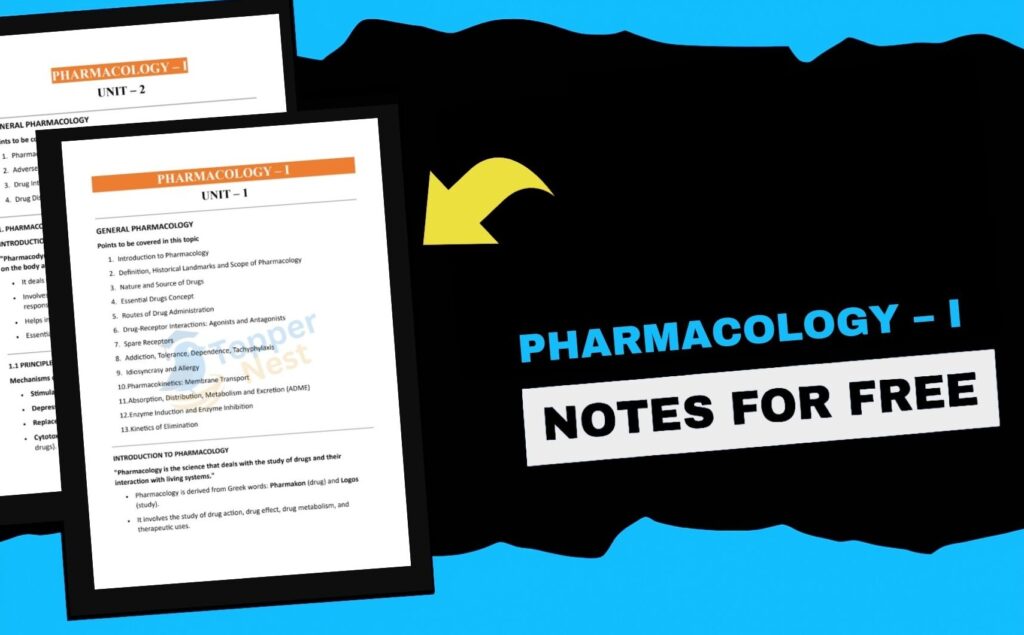
Pharmacology – I Notes
What is Pharmacology – I in Pharmacy?
Pharmacology – I is the branch of pharmacy that deals with the study of drugs, their sources, mechanisms of action, therapeutic uses, side effects, and interactions within the body.
This subject equips future pharmacists with the knowledge needed to:
- Understand how drugs produce their effects
- Study drug absorption, distribution, metabolism, and excretion (ADME)
- Classify medicines based on action
- Ensure safe and rational use of drugs
- Support patient counseling and clinical decision-making
It forms the scientific link between pharmacy practice and patient therapy.
Here are the key reasons why this subject is crucial:
1. Enhancing Patient Safety and Therapeutic Accuracy
Pharmacological knowledge helps minimize medication errors and improve outcomes.
Mechanism of Action:
Understanding how drugs act helps in selecting the right medicine for each condition.
Dose–Response Relationship:
Determines safe and effective dosage ranges.
Adverse Effects Monitoring:
Helps predict and prevent harmful reactions.
Drug Interactions:
Avoids complications caused by multiple medications.
2. Streamlining Research and Drug Development
Pharmacology plays a key role in evaluating new medicines.
Preclinical Testing:
Assesses safety and efficacy before human use.
Pharmacokinetic Studies:
Analyzes ADME to optimize dosing schedules.
Pharmacodynamic Evaluation:
Measures therapeutic and toxic effects.
Clinical Trials:
Ensure drugs are safe and effective for public use.
3. Improving Professional Efficiency and Compliance
Pharmacological understanding improves everyday pharmacy practice.
Rational Prescribing:
Ensures appropriate drug selection.
Therapeutic Drug Monitoring:
Maintains effective drug levels.
Patient Counseling:
Educates patients about proper use and precautions.
Regulatory Compliance:
Ensures medicines meet safety and legal standards.
Why Pharmacology – I is Important in B. Pharmacy
Pharmacology – I is important in B. Pharmacy because it connects drug science with clinical practice, ensuring pharmacists understand how medicines work and how they should be used safely and effectively.
1. Understanding Drug Action and Patient Care
This subject teaches future pharmacists how drugs influence the body.
Therapeutic Effects:
Helps achieve desired clinical outcomes.
Side Effects:
Prepares pharmacists to manage adverse reactions.
Drug Selection:
Supports evidence-based therapy.
Personalized Treatment:
Considers patient-specific factors.
2. Safe Medication Practices
Pharmacists must ensure medicines are used safely and correctly.
Dose Calculation:
Prevents underdosing or overdosing.
Drug Interactions:
Identifies harmful combinations.
Contraindications:
Avoids use in risky conditions.
Monitoring Therapy:
Ensures effectiveness and safety.
3. Regulatory Compliance
Knowledge of pharmacology is necessary for professional and legal responsibilities.
Pharmacists working in hospitals, community pharmacies, research, or regulatory sectors must ensure that drug dispensing, counseling, and therapeutic decisions comply with established guidelines and safety standards to protect patient health.