
Before factories and synthetic chemistry, medicines came straight from forests, farms, and oceans. Even today, many pharmaceutical aids and therapeutic agents originate from natural products—fibers used in dressings, plant gums used as suspending agents, enzymes used in therapy, and oils used in formulations.
UNIT 5 highlights the biological sources, chemical nature, and pharmaceutical uses of key natural drugs and primary metabolites, showing how everyday natural substances play critical roles in modern pharmacy.
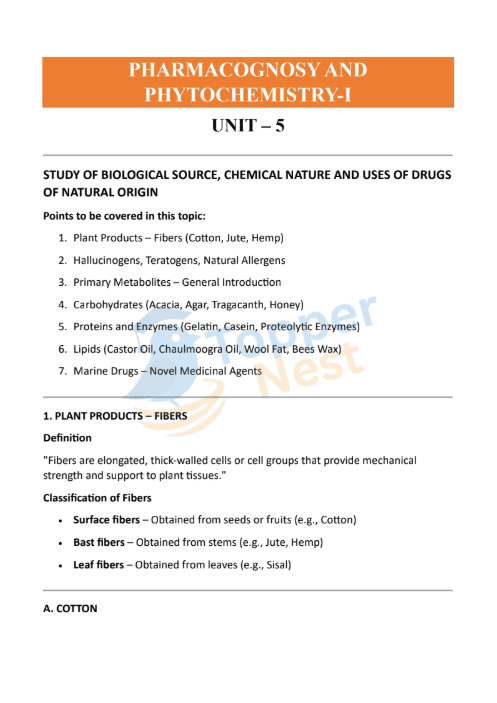
Plant Products: Fibers
Fibers are structural plant materials widely used as pharmaceutical aids.
Cotton
Source
Seed hairs of cotton plant
Uses
- Surgical dressings
- Bandages
- Absorbent cotton
Highly purified cellulose provides excellent absorbency.
Jute
Used for packaging and storage materials.
Hemp
Used in ropes, filters, and some industrial pharmaceutical applications.
Fibers support packaging, protection, and processing of medicines.
Hallucinogens, Teratogens, and Natural Allergens
Certain natural substances have harmful or psychoactive effects.
Categories
- Hallucinogens – alter perception
- Teratogens – cause fetal defects
- Allergens – trigger hypersensitivity
Understanding these helps prevent toxicity and ensure safe herbal use.
Primary Metabolites: An Overview
Primary metabolites are compounds essential for plant growth but also useful medicinally.
They include:
- Carbohydrates
- Proteins
- Enzymes
- Lipids
These substances serve as excipients, stabilizers, or therapeutic agents.
Carbohydrates
Carbohydrates from plants often act as binders, suspending agents, or demulcents.
Acacia gum
Uses
- Emulsifier
- Binder
- Suspending agent
Agar
Uses
- Laxative
- Culture medium
- Thickener
Tragacanth
Used in stabilizing emulsions and suspensions.
Honey
Properties
Antibacterial and soothing
Used in cough syrups and wound healing.
Proteins and Enzymes
Proteins and enzymes play therapeutic and pharmaceutical roles.
Gelatin
Used in capsules and tablets as binder.
Casein
Acts as stabilizer and nutrient source.
Proteolytic Enzymes
Examples
- Papain
- Bromelain
- Streptokinase
Uses
- Anti-inflammatory
- Digestive aid
- Clot dissolution
Enzymes offer targeted therapeutic effects.
Lipids: Waxes, Fats, and Fixed Oils
Lipids act as emollients, bases, and vehicles.
Castor oil
Used as laxative and plasticizer.
Chaulmoogra oil
Historically used for leprosy treatment.
Lanolin
Used as ointment base and moisturizer.
Beeswax
Used in creams, ointments, and cosmetics.
Lipids enhance drug delivery and stability.
Marine Drugs
Medicines from the Sea
Marine organisms produce unique bioactive compounds not found on land.
Sources include:
- Sponges
- Algae
- Corals
- Marine bacteria
These compounds show:
- Anticancer
- Antiviral
- Anti-inflammatory activity
Marine pharmacognosy is an emerging research frontier.
Preparation, Evaluation, and Storage
Natural drugs require careful handling.
Key Steps
- Proper collection
- Drying and preservation
- Standardization
- Storage in cool, dry conditions
This maintains potency and prevents contamination.
Why Natural Products Still Matter
Natural drugs:
- Provide affordable therapies
- Serve as excipients
- Inspire new drug discovery
- Support sustainable medicine
Pharmacognosy ensures these resources are used safely and effectively.