
While the sympathetic system prepares the body for action, the parasympathetic nervous system quietly maintains balance—slowing the heart, stimulating digestion, and promoting glandular secretion. The key messenger of this system is Acetylcholine, one of the most important neurotransmitters in medicinal chemistry.
UNIT 3 explores how cholinergic drugs either stimulate or block acetylcholine activity, forming the basis for therapies used in glaucoma, asthma, Alzheimer’s disease, and gastrointestinal disorders.
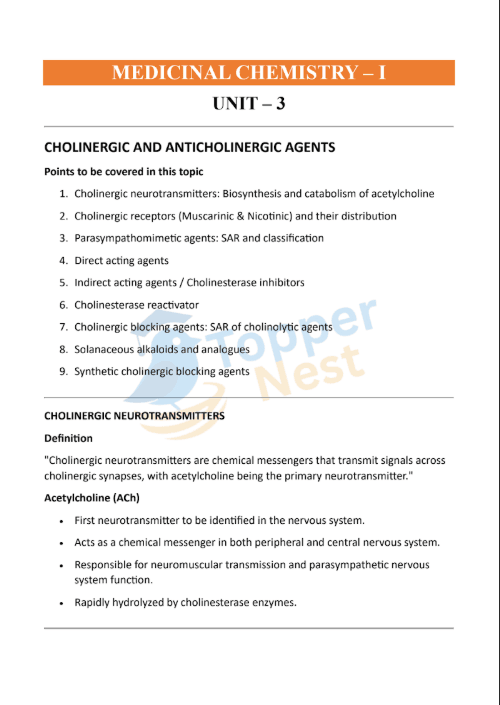
Cholinergic Neurotransmitters
Biosynthesis of Acetylcholine
Acetylcholine is synthesized in nerve terminals.
Steps
- Choline uptake into neuron
- Combination with acetyl-CoA
- Enzyme choline acetyltransferase forms acetylcholine
It is stored in synaptic vesicles and released upon nerve stimulation.
Catabolism of Acetylcholine
Breakdown occurs rapidly through acetylcholinesterase.
Products
- Choline
- Acetic acid
This quick hydrolysis ensures precise control of neurotransmission.
Cholinergic Receptors and Distribution
Muscarinic Receptors
Located in:
- Heart
- Smooth muscles
- Glands
- Eyes
Responsible for parasympathetic effects like decreased heart rate and increased secretions.
Nicotinic Receptors
Found in:
- Neuromuscular junctions
- Autonomic ganglia
They control skeletal muscle contraction.
Understanding receptor distribution helps design selective drugs.
Parasympathomimetic Agents (Cholinergic Agonists)
These drugs mimic acetylcholine and stimulate cholinergic receptors.
Structure–Activity Relationship (SAR)
Key features include:
- Quaternary ammonium group
- Proper ester linkage
- Short alkyl chain
- Resistance to hydrolysis increases duration
These structural elements determine potency and selectivity.
Direct-Acting Agents
Examples
- Methacholine
- Carbachol
- Bethanechol
- Pilocarpine
Therapeutic Uses
- Glaucoma
- Urinary retention
- Xerostomia
- Diagnostic bronchial testing
These drugs directly activate muscarinic receptors.
Indirect-Acting Agents: Cholinesterase Inhibitors
These inhibit acetylcholinesterase, increasing acetylcholine concentration.
Reversible Inhibitors
Examples
- Physostigmine
- Neostigmine
- Pyridostigmine
- Edrophonium chloride
Uses
- Myasthenia gravis
- Alzheimer’s disease
- Postoperative ileus
Irreversible Inhibitors
Examples
- Parathion
- Malathion
These form strong bonds with enzymes and may cause toxicity.
Cholinesterase Reactivator
Pralidoxime chloride
Used to reverse organophosphate poisoning by regenerating acetylcholinesterase.
Cholinergic Blocking Agents (Anticholinergics)
These drugs block acetylcholine action at muscarinic receptors.
SAR of Cholinolytic Agents
Important structural requirements:
- Tertiary or quaternary amine
- Aromatic rings
- Ester or ether linkage
- Proper spacing between functional groups
These features reduce cholinergic activity.
Solanaceous Alkaloids and Analogues
Examples
- Atropine sulfate
- Scopolamine hydrobromide
- Ipratropium bromide
Uses
- Bronchodilation
- Motion sickness
- Eye examinations
Synthetic Anticholinergics
Examples
- Tropicamide
- Dicyclomine hydrochloride
- Glycopyrrolate
- Procyclidine hydrochloride
Used in gastrointestinal disorders, asthma, and Parkinson’s disease.
Clinical Importance of Cholinergic Drugs
These agents help manage:
- Asthma and COPD
- Glaucoma
- Alzheimer’s disease
- Gastrointestinal spasms
- Organophosphate poisoning
Their wide applications make them indispensable in modern therapeutics.