
Sleep disorders, anxiety, psychosis, and epilepsy all originate from disturbances in the central nervous system (CNS). Modern medicinal chemistry provides a wide range of drugs that either depress or stabilize brain activity to restore normal function. UNIT 4 explores three major therapeutic groups—sedatives–hypnotics, antipsychotics, and anticonvulsants—and explains how molecular structure determines pharmacological effect.
From hospital ICUs to psychiatric wards and epilepsy clinics, these CNS drugs save lives daily.
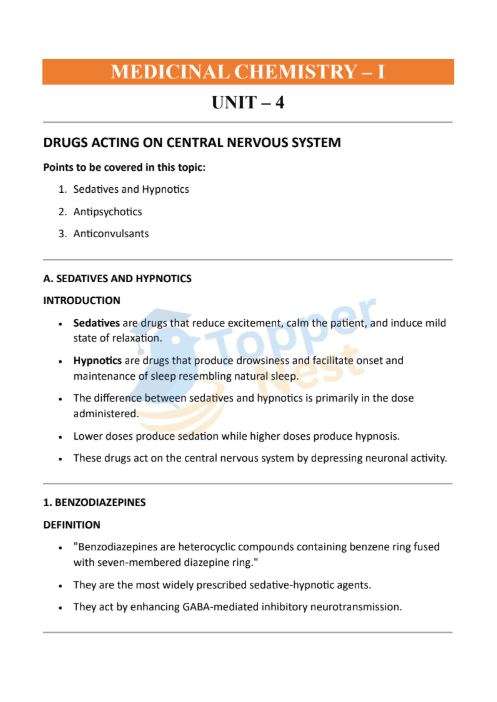
A. Sedatives and Hypnotics
Sedatives reduce anxiety and calm the patient, while hypnotics induce sleep. Most act by enhancing GABA-mediated inhibition in the brain.
Benzodiazepines
SAR of Benzodiazepines
Key structural features include:
- Benzene ring fused to diazepine ring
- Electron-withdrawing group at position 7
- Substitutions affecting lipid solubility
- Heterocyclic nitrogen enhancing receptor binding
Important Drugs
- Diazepam
- Lorazepam
- Alprazolam
- Oxazepam
- Zolpidem
Uses
- Anxiety
- Insomnia
- Muscle relaxation
- Seizure control
They are preferred due to safer profiles than barbiturates.
Barbiturates
SAR of Barbiturates
Activity depends on:
- Substitution at C-5
- Lipid solubility
- Chain length
Examples
- Phenobarbital
- Pentobarbital
- Secobarbital
Limitations
- Respiratory depression
- Dependence risk
Thus, their use has declined.
Miscellaneous Sedatives
- Meprobamate
- Glutethimide
- Paraldehyde
Used when benzodiazepines are unsuitable.
B. Antipsychotics
These drugs manage schizophrenia, mania, and psychotic disorders mainly by blocking dopamine receptors.
Phenothiazines
SAR
- Tricyclic phenothiazine nucleus
- Side-chain amine
- Substitutions affect potency
Examples
- Chlorpromazine
- Thioridazine
- Trifluoperazine
Used for psychosis, nausea, and agitation.
Ring Analogues and Others
- Clozapine
- Haloperidol
- Risperidone
- Sulpiride
These newer agents show fewer extrapyramidal side effects.
C. Anticonvulsants
Anticonvulsants prevent abnormal neuronal firing responsible for seizures.
Mechanisms of Action
- Sodium channel blockade
- GABA enhancement
- Calcium channel inhibition
- Glutamate suppression
Important Classes and Drugs
Hydantoins
- Phenytoin
Succinimides
- Ethosuximide
Urea derivatives
- Carbamazepine
Benzodiazepines
- Clonazepam
Miscellaneous
- Valproic acid
- Gabapentin
These drugs treat epilepsy, neuropathic pain, and mood disorders.
Why SAR Matters in CNS Drugs
Small structural changes influence:
- Blood–brain barrier penetration
- Potency
- Duration
- Side effects
Thus, SAR guides safer and more selective CNS therapies.