
Few areas of medicine are as dramatic and life-critical as central nervous system (CNS) pharmacology. Whether rendering a patient unconscious for surgery, relieving severe pain, or controlling inflammation, CNS-active drugs must be precise, potent, and predictable. UNIT 5 brings together three major pillars of CNS therapy—general anesthetics, analgesics, and anti-inflammatory agents—and explains how medicinal chemistry transforms molecular structure into clinical action.
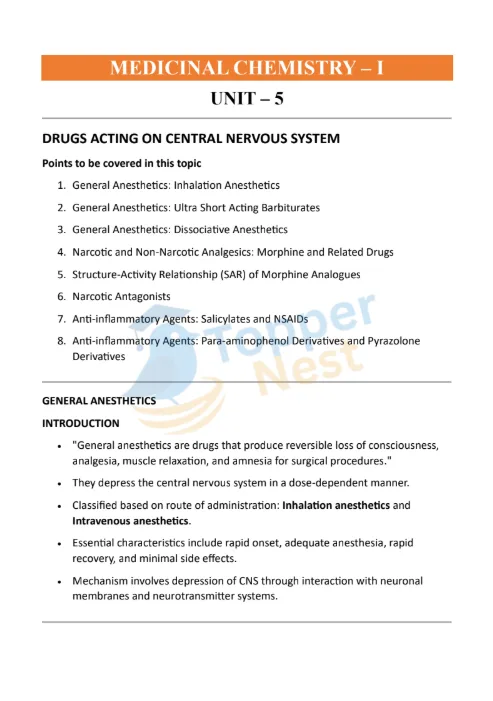
General Anesthetics
General anesthetics produce reversible loss of consciousness, sensation, and reflexes, enabling pain-free surgery.
Inhalation Anesthetics
These volatile agents are administered via the lungs and act rapidly.
Key Drugs
- Halothane
- Isoflurane
- Sevoflurane
- Desflurane
Features and Uses
- Rapid induction and recovery
- Easy control of depth of anesthesia
- Widely used in major surgeries
Their lipid solubility correlates with anesthetic potency.
Ultra-Short Acting Barbiturates
Used mainly for induction of anesthesia.
Examples
- Methohexital sodium
- Thiopental sodium
Advantages
- Rapid onset
- Short duration
- Useful for brief procedures
Dissociative Anesthetics
Ketamine hydrochloride
Ketamine produces dissociative anesthesia by blocking NMDA receptors.
Uses include:
- Trauma and emergency anesthesia
- Pediatric procedures
- Analgesia with preserved reflexes
Narcotic and Non-Narcotic Analgesics
Pain management ranges from mild headaches to severe cancer pain, requiring drugs with different strengths and mechanisms.
Opioid (Narcotic) Analgesics
Opioids act mainly on μ-opioid receptors to block pain perception.
SAR of Morphine Analogues
Important features include:
- Phenanthrene nucleus
- Tertiary amine
- Phenolic hydroxyl group
- Substitutions modifying potency and dependence
Representative Drugs
- Morphine sulfate
- Codeine
- Fentanyl citrate
- Methadone hydrochloride
Clinical Uses
- Severe postoperative pain
- Cancer pain
- Myocardial infarction
Narcotic Antagonists
These reverse opioid effects and are lifesaving in overdose.
Key Agents
- Naloxone hydrochloride
- Nalorphine hydrochloride
They competitively block opioid receptors without activating them.
Non-Narcotic Analgesics
These relieve mild to moderate pain without dependence.
- Acetaminophen
- Phenacetin
They are commonly used for headaches, fever, and minor pain.
Anti-Inflammatory Agents
Inflammation underlies pain, swelling, and tissue damage. Anti-inflammatory drugs reduce prostaglandin synthesis.
Non-Steroidal Anti-Inflammatory Drugs (NSAIDs)
Common Examples
- Aspirin
- Ibuprofen
- Diclofenac
- Indomethacin
Mechanism of Action
- Inhibition of cyclooxygenase (COX) enzymes
- Reduced prostaglandin synthesis
- Decreased pain and inflammation
Therapeutic Applications
NSAIDs are widely used for:
- Arthritis
- Musculoskeletal pain
- Dysmenorrhea
- Postoperative inflammation
Their non-sedative nature makes them suitable for long-term use, though gastric side effects require caution.
Why Medicinal Chemistry Matters in CNS Drugs
Small structural changes can:
- Alter blood–brain barrier penetration
- Increase or decrease potency
- Reduce toxicity
- Improve duration of action
Medicinal chemistry balances efficacy with safety in CNS therapeutics.