
From raising blood pressure during shock to opening airways during asthma attacks, the autonomic nervous system (ANS) controls many life-saving responses. At the heart of this system lies a group of chemical messengers called adrenergic neurotransmitters, which act on alpha and beta receptors to regulate heart rate, breathing, and vascular tone.
UNIT 2 explores the medicinal chemistry behind these drugs—how they are synthesized in the body, how they interact with receptors, and how scientists design molecules to either stimulate or block their effects.
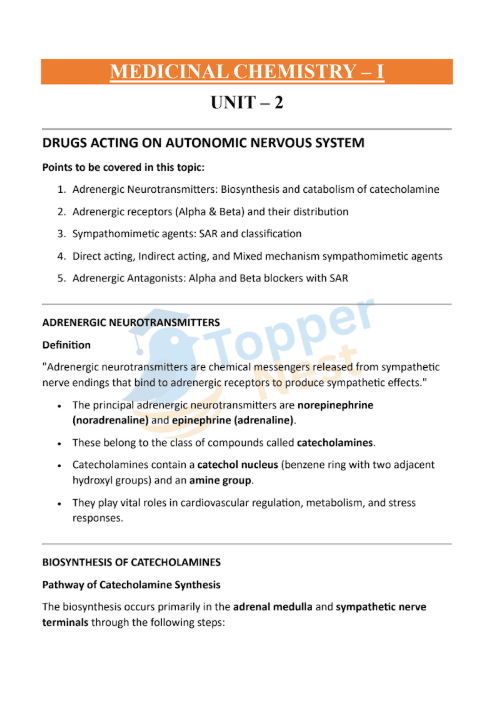
Adrenergic Neurotransmitters
Biosynthesis and Catabolism of Catecholamines
Catecholamines are synthesized from the amino acid tyrosine.
Steps of Biosynthesis
- Tyrosine → DOPA
- DOPA → Dopamine
- Dopamine → Norepinephrine
- Norepinephrine → Epinephrine
The principal hormones include Epinephrine and Norepinephrine.
Catabolism
They are metabolized by:
- Monoamine oxidase (MAO)
- Catechol-O-methyl transferase (COMT)
Metabolism terminates their action.
Adrenergic Receptors and Distribution
Adrenergic receptors are divided into:
Alpha Receptors
- α₁ → vasoconstriction
- α₂ → feedback inhibition
Beta Receptors
- β₁ → heart stimulation
- β₂ → bronchodilation
- β₃ → lipid metabolism
Knowledge of receptor location helps design selective drugs.
Sympathomimetic Agents
These drugs mimic sympathetic nervous system activity.
Structure–Activity Relationship (SAR)
Key structural features include:
- Aromatic ring for receptor binding
- Amino group for activity
- Side-chain length affecting potency
- Substitution determining selectivity
Small changes can convert a drug from cardiac stimulant to bronchodilator.
Direct-Acting Sympathomimetics
These act directly on receptors.
Examples
- Phenylephrine – nasal decongestant
- Dopamine – shock management
- Salbutamol – asthma relief
- Isoproterenol – cardiac stimulant
- Clonidine – hypertension
Uses
- Asthma
- Hypotension
- Cardiac arrest
- Nasal congestion
Indirect-Acting Agents
These promote release of stored catecholamines.
Examples
- Pseudoephedrine
- Hydroxyamphetamine
They enhance endogenous neurotransmitter levels.
Mixed Mechanism Agents
Examples
- Ephedrine
- Metaraminol
They both stimulate receptors and release catecholamines.
Adrenergic Antagonists: Blocking the Response
While agonists stimulate, antagonists block adrenergic activity, widely used in cardiovascular diseases.
Alpha-Adrenergic Blockers
Examples
- Phentolamine
- Phenoxybenzamine
- Prazosin
Therapeutic Uses
- Hypertension
- Pheochromocytoma
- Peripheral vascular disorders
They relax blood vessels and lower blood pressure.
Beta-Adrenergic Blockers
SAR of Beta Blockers
- Aryloxypropanolamine structure
- Secondary amine
- Substitution controls β₁ selectivity
Common Beta Blockers
- Propranolol
- Atenolol
- Metoprolol
- Carvedilol
- Labetalol
Clinical Applications
- Hypertension
- Angina
- Arrhythmias
- Heart failure
They reduce heart workload and oxygen demand.
Why Adrenergic Medicinal Chemistry Matters
Understanding these drugs helps clinicians:
- Control blood pressure
- Treat asthma
- Manage shock
- Regulate heart function
Small molecular changes create major therapeutic differences, showing the power of SAR in medicinal chemistry.